As fall approaches each year, it signals the time for changes in the weather, holidays with family—and coughing, sneezing, sore throats, and headaches. When these symptoms hit, how do you know if you have the common cold or the flu?
The common cold and the flu (or influenza) are both contagious respiratory illnesses caused by viruses. They share many similar symptoms, but they are 2 different conditions.
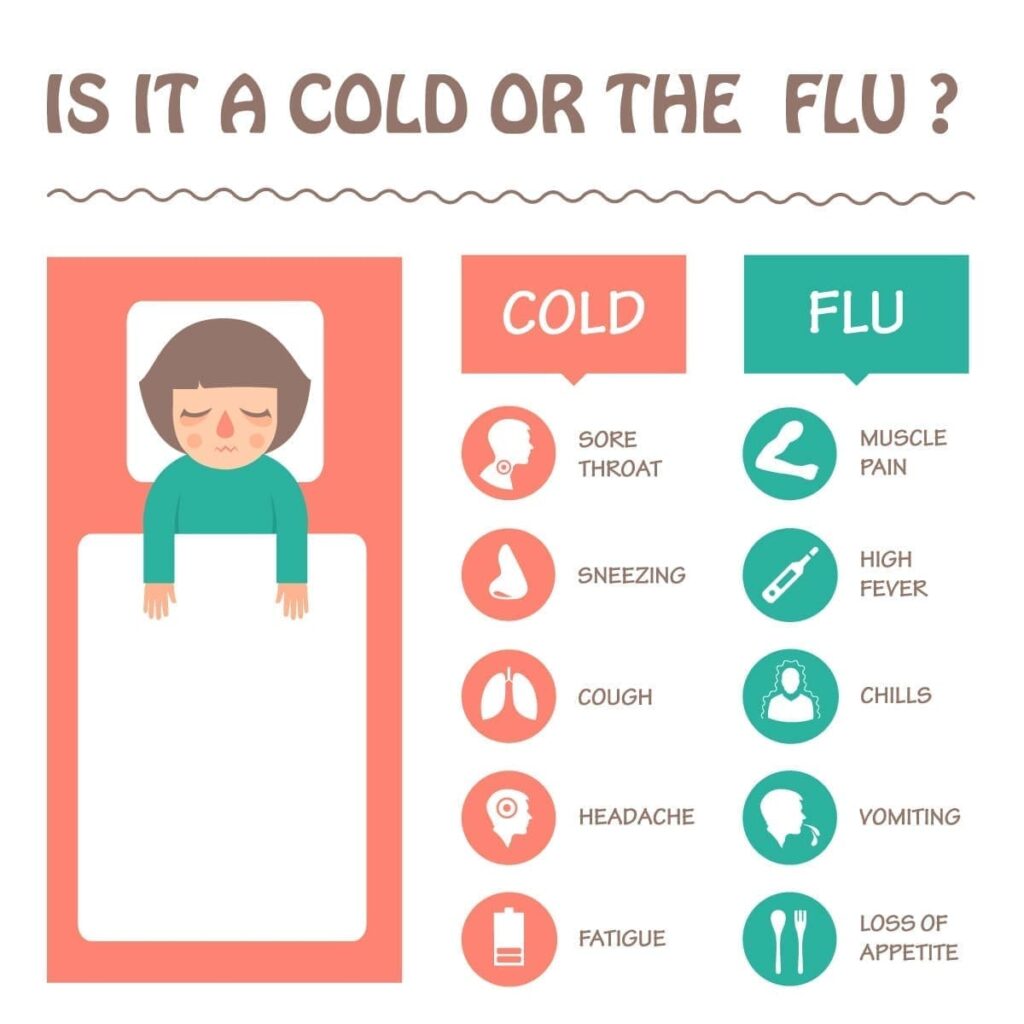
Cold symptoms are generally milder. They develop slowly and can include:
- fever up to 102°F
- runny or stuffy nose (often with green- or yellow-colored discharge)
- sore throat
- cough
- sneezing
- fatigue
- muscle aches
- headache
Flu symptoms are more severe. They usually appear suddenly and can include:
- fever over 102°F
- stuffy nose
- nausea
- chills and sweats
- fatigue
- muscle aches, especially in your back, arms and legs
- cough
- headache
- loss of appetite
- vomiting and diarrhea (more common in children)
Path to improved health
If you do end up with a cold or the flu, there are ways to make yourself feel better while your body fights off the virus.
- Get plenty of rest. This is especially important if you have a fever. Rest helps your body fight infection.
- Stop smoking. Also avoid secondhand smoke. Smoke can make cold symptoms worse.
- Drink lots of fluids. Try drinking water, tea, and clear soups. Fluids help loosen mucus and can also help prevent dehydration.
- Avoid alcohol. Alcohol can dehydrate you and make symptoms like congestion even worse.
- Gargle with warm saltwater a few times a day to help relieve a sore throat. Throat sprays or lozenges may also help relieve the pain. Be careful with lozenges, as they can be a choking hazard for small children.
- Use saline (saltwater) nose drops. They will help loosen mucus and moisten the tender skin in your nose. These are safe to use on young children and babies. You can also use a bulb syringe to suction mucus out of their nose.
- Use a humidifier. This will add moisture to the air, which can help loosen chest and nasal congestion.
- Take medicine. Over-the-counter medicines can’t cure a cold or the flu, but they can relieve some of your symptoms. Talk with your doctor before giving any medicine to children. Some medicines are harmful to young children and infants.
- Get a prescription (if it’s the flu). Antibiotics won’t kill cold or flu viruses. However, if you have the flu, your doctor may prescribe an antiviral medicine. These can shorten the length of time you are sick with the flu.
Things to consider
Viruses cause colds and the flu, so there is no cure. However, there are steps you can take to protect yourself and others from getting sick.
- Wash your hands frequently. This will help stop the spread of germs.
- Eat healthy, exercise, and get enough sleep. Doing these things helps boost your immune system.
- Cough and sneeze into your elbow (rather than your hand). Think about all the germs you can spread if you use your hands!
- Clean common surfaces with antibacterial disinfectant. Obvious areas are tables and countertops, but don’t forget to clean door handles, light switches and even your child’s toys.
- Stay home when you’re sick. You can be contagious before you start to show symptoms and after you start to feel better.
- Stay away from people who are sick. This is especially important for young children and infants, pregnant women, people age 65 and older and anyone with a chronic medical condition, such as asthma. People in these groups are at higher risk for flu-related complications.
- Get a flu shot. The best way to avoid getting the flu is to get the seasonal influenza vaccine. The vaccine is especially important for people who are considered higher risk for flu-related complications.
When to see your doctor
Usually, cold and flu symptoms will run their course naturally and you’ll start to feel better in a few days or a week. There are instances when your symptoms or your child’s symptoms can lead to more serious illnesses. Call your doctor if you or your child have the following symptoms:
In children:
- High fever (above 103°F), or a fever that lasts for more than 3 days.
- Symptoms that last for more than 10 days.
- Trouble breathing, fast breathing or wheezing.
- Bluish skin color.
- Earache or drainage from the ear.
- Changes in mental state (such as not waking up, irritability or seizures).
- Flu-like symptoms that improve but return with a fever and a worse cough.
- Worsening of a chronic medical condition (such as diabetes or heart disease).
- Vomiting or abdominal pain.
In adults:
- A high, prolonged fever (above 102°F) with fatigue and body aches.
- Symptoms that last for more than 10 days or get worse instead of better.
- Trouble breathing or shortness of breath.
- Pain or pressure in the chest.
- Fainting or feeling like you are about to faint.
- Confusion or disorientation.
- Severe or persistent vomiting.
- Severe sinus pain in your face or forehead.
- Very swollen glands in the neck or jaw.
Questions to ask your doctor
- What over-the-counter medicines work best for my symptoms?
- What over-the-counter medicines are safest for my child?
- Are there natural remedies for my symptoms?
- If I decide not to get a flu shot, am I at risk for any complications if I do end up getting the flu?